A room per research repository, and the grounds between
weichselmind
Recorded particle simulations you can walk into, pause, and trace back to their source.
Four repositories have a room so far — einstruct, coarsen, phototroph, world-engine — plus the gallery, the orangery and the grounds outside. Each room holds one question, the recorded run that speaks to it, and what that run cannot establish.
Runs in the browser. No account, no installation, no tracking. Needs WebGL2.
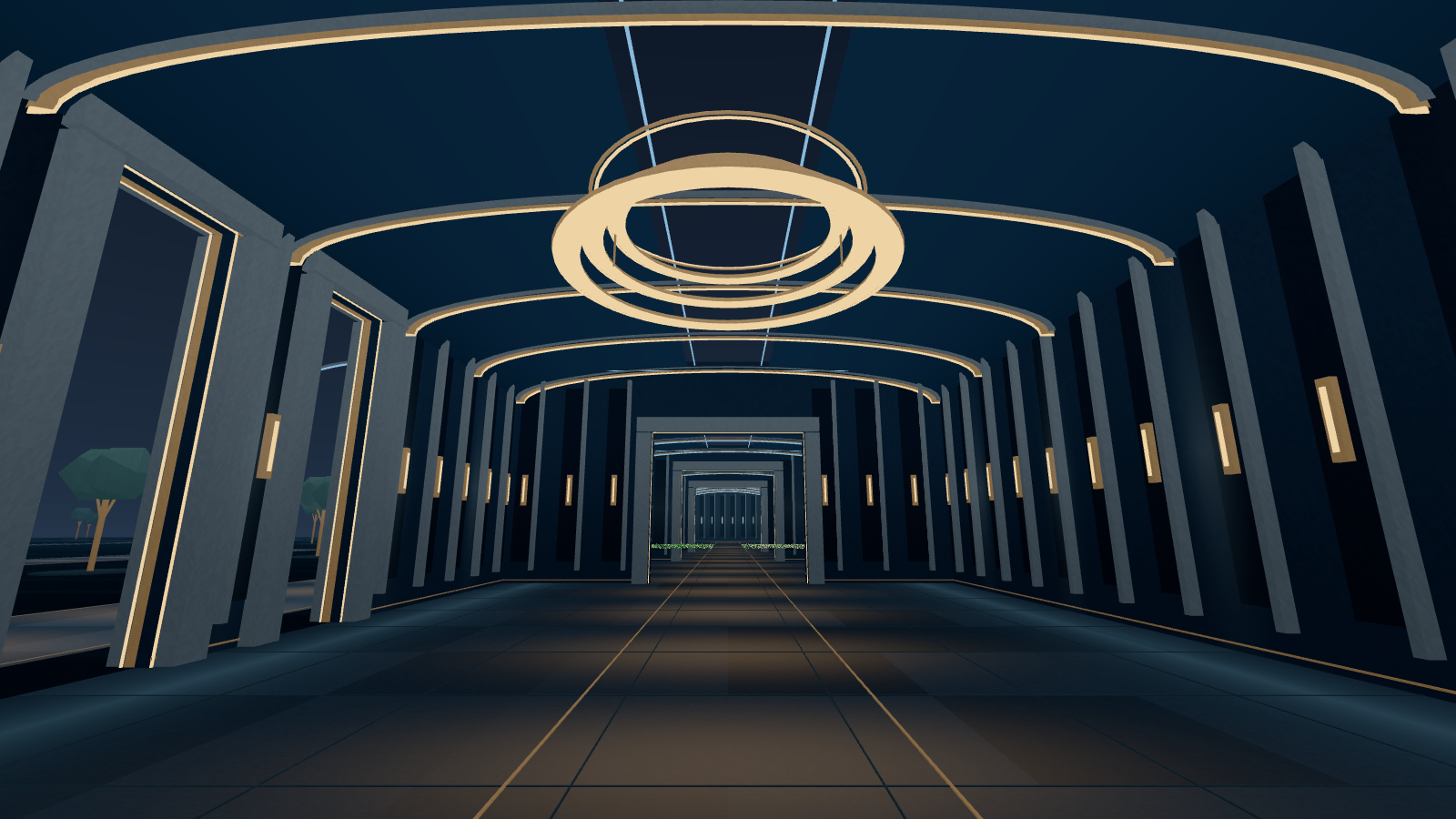
The rooms so far
A room carries its repository’s name, and what hangs in it is the recorded run, with its bundle identity and digests beside it. More repositories are still earning a door.
einstruct
When do two kinds stop mixing?
Unlike particles annihilate on contact. Compare a sheet left to evolve with its neighbour, where the kinds are repeatedly shuffled.
Open the room ↗coarsen
How does a world find its middle?
Three self-gravitating worlds start from the same mixture; the two kinds repel each other with different strength. Each is cut open, its interior measured frame by frame.
Open the room ↗phototroph
What lets two atoms stay together?
One encounter between three atoms. Two settle into a pair while the third leaves, carrying energy away. One capture, replayed — not a new experiment.
Open the room ↗world-engine
What does a new viewpoint reveal?
How much of a room can be rebuilt from a compact description. Look behind the chair and along its edges for holes and stretched surfaces.
Open the room ↗And between them
A long gallery with closed doors, the orangery, the terrace, and the garden below it — where the armillary over the basin is a portal: step into it and the three coarsen worlds stand eighty metres across. Nothing hangs in these places. They are for walking and getting your bearings.
Large tapes are shown as sampled views. Every exhibit states what it cannot establish, and Sources inside the world prints the tree, bundle identity and digest it came from.
How to visit
Desktop, touch and headset share one world. Headset and phone playback still need a hardware check.
Laptop
Click the view to look, walk with W A S D or the arrow keys. Space pauses a tape, [ and ] step one frame, Esc returns the pointer to the controls.
Phone or tablet
Drag the view to look. The round stick at the bottom left walks. Play and the time slider sit in the dock; landscape gives the tape more room.
Headset
Open this page in the Quest browser and choose Enter VR when offered. Left stick walks, the trigger plays or pauses, the menu button shows sources.
Why this exists
I’m Manuel Weichselbaum. I run particle simulations, and a video of one is never the thing itself — it is my camera, my crop, my moment.
So I put the recordings somewhere you can walk in and look for yourself: pause them, step a frame, go round the back, and read what the run does not establish. If you decide I am wrong, the source is right there next to the exhibit.
One person, no institution. orchard is the software behind this — it collects the outputs, keeps their provenance, and decides what hangs. AGPL-3.0, so you can run your own.